One of the most common — and consequential — medical misunderstandings is the difference between a viral and a bacterial infection. Patients often arrive at a clinic expecting antibiotics, only to learn their illness is viral and antibiotics will not help. Understanding the distinction between a viral vs bacterial infection in Fort Myers is not just academic — it directly affects how you should be treated, how long you will be sick, and whether you risk contributing to the growing antibiotic resistance crisis.
At Florida Infectious Disease Care, our board-certified specialists diagnose and manage both types of infections every day. This guide gives you a clear, practical breakdown of the differences — and explains why getting the diagnosis right matters so much.
What Is a Bacterial Infection?
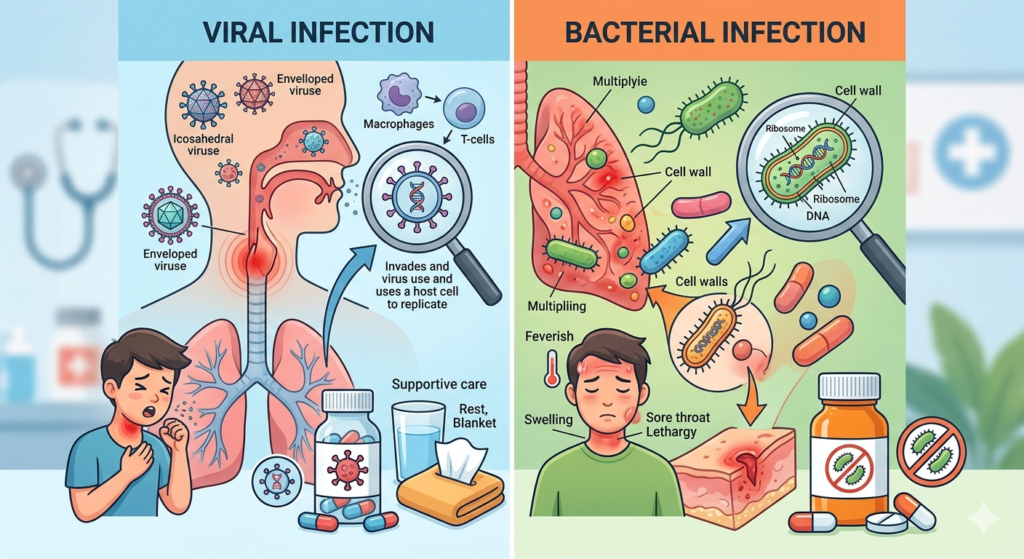
Bacteria are single-celled living organisms that exist almost everywhere — in soil, water, on surfaces, and inside your body. Most bacteria are harmless or even beneficial. However, certain bacteria cause illness when they multiply out of control, release toxins, or invade tissues they do not belong in.
Common bacterial infections include urinary tract infections, strep throat, pneumonia caused by Streptococcus pneumoniae, skin infections like cellulitis and MRSA, and sexually transmitted infections such as gonorrhea, chlamydia, and syphilis. Critically, bacterial infections respond to antibiotics — when the right antibiotic is selected and taken correctly.
What Is a Viral Infection?
Viruses are far smaller than bacteria and fundamentally different in structure. They are not living cells — instead, they are genetic material (DNA or RNA) enclosed in a protein coat. Viruses work by invading your own cells and hijacking their machinery to reproduce.
Common viral infections include influenza, COVID-19, HIV, herpes, hepatitis A and B, the common cold, and dengue fever. Antibiotics have absolutely no effect on viruses. Treating a viral infection with antibiotics does not shorten illness, does not prevent complications, and contributes to antibiotic resistance in your body and community.
Viral vs Bacterial Infection Fort Myers: How to Tell the Difference
In practice, distinguishing viral from bacterial infections is not always straightforward — even for experienced clinicians. However, certain patterns can guide the assessment:
Onset and Duration
Viral infections often come on gradually and tend to involve multiple symptoms at once — runny nose, sore throat, body aches, and fatigue appearing together. Bacterial infections frequently develop more rapidly and can localize to one area — a severely sore throat, a painful ear, or a specific area of the chest.
Fever Patterns
Both viral and bacterial infections can cause fever. However, very high fevers (above 103°F) that persist beyond three to four days are more suggestive of a bacterial cause. Viral fevers tend to respond more readily to fever-reducing medications and typically resolve within a week.
Mucus Color
The popular belief that green or yellow mucus indicates a bacterial infection is largely a myth. Both viral and bacterial infections can produce discolored mucus. Color alone should never determine whether antibiotics are prescribed.
Diagnostic Testing
The most reliable way to distinguish viral from bacterial infection is through laboratory testing. Bacterial cultures, rapid strep tests, urinalysis, complete blood counts, and — in complex cases — imaging studies all help infectious disease specialists reach an accurate diagnosis. At Florida Infectious Disease Care, we use comprehensive diagnostic testing to ensure every patient receives precisely the right treatment.
Why This Distinction Is Critical for Treatment
The treatment pathways for viral and bacterial infections are completely different. Bacterial infections require targeted antibiotic therapy. Viral infections are managed with supportive care — rest, hydration, fever management — and in some cases, specific antiviral medications such as oseltamivir for influenza or antiretrovirals for HIV.
Prescribing antibiotics for viral infections is one of the leading drivers of antibiotic resistance globally. According to the World Health Organization, antibiotic resistance is one of the greatest threats to global health, making previously treatable infections increasingly difficult or impossible to manage. Our infectious disease team at Florida Infectious Disease Care is committed to precise, evidence-based prescribing that protects both individual patients and the broader community.
When Do You Need an Infectious Disease Specialist?
Your primary care physician can manage most straightforward infections. However, you should see an infectious disease specialist if:
- Your infection is not improving after a standard course of treatment
- You have had the same infection recur multiple times
- You are immunocompromised and develop any new infection
- Your provider suspects an antibiotic-resistant organism
- You need IV antibiotic therapy for a serious bacterial infection
- Your diagnosis is uncertain despite initial testing
Our general infectious disease services cover the full spectrum of both viral and bacterial conditions in Southwest Florida. We have the diagnostic expertise and treatment options to get to the right answer — and the right treatment — faster.
Common Misconceptions About Antibiotics in Florida
A significant portion of patients in Florida — as in the rest of the United States — have received antibiotics for viral illnesses at some point. This is partly a result of patient pressure and partly a result of diagnostic uncertainty in busy primary care settings. However, the consequences of antibiotic overuse are real and serious.
According to the CDC, at least 28% of antibiotics prescribed in outpatient settings in the United States are unnecessary — primarily being given for viral conditions. Every unnecessary antibiotic course increases the risk of resistant infections, disrupts healthy gut bacteria, and exposes patients to side effects without any benefit.
Viral Infections With Antiviral Treatment Options
While most viral infections are managed with supportive care, some do have specific antiviral treatments. These include:
- HIV — managed with highly effective antiretroviral therapy
- Influenza — oseltamivir (Tamiflu) reduces duration and severity when started early
- Herpes simplex and herpes zoster — acyclovir and valacyclovir reduce outbreaks
- Hepatitis C — highly effective direct-acting antiviral regimens achieve cure rates above 95%
- COVID-19 — antivirals such as nirmatrelvir/ritonavir (Paxlovid) are available for eligible high-risk patients
If you have been diagnosed with a viral infection and wonder whether antiviral treatment applies to your situation, our specialists can evaluate your case and guide you to the most current and effective options available.
Frequently Asked Questions
Q: Can I have a viral and bacterial infection at the same time?
Yes — this is called a secondary bacterial infection. A common example is a viral respiratory illness that weakens the immune system enough to allow bacteria to cause a subsequent ear infection, sinus infection, or bacterial pneumonia. This is one reason why some viral illnesses do ultimately require antibiotic treatment — not for the virus itself, but for the bacterial complication.
Q: How quickly do antibiotics work for bacterial infections?
Most patients with uncomplicated bacterial infections begin to feel improvement within 48 to 72 hours of starting the correct antibiotic. If you are not improving within that timeframe, contact your provider — this may indicate the antibiotic is not well-matched to your specific organism, or the diagnosis needs to be reconsidered.
Q: Can I request a test to confirm whether my infection is viral or bacterial before accepting antibiotics?
Absolutely — and you should. Requesting a culture, rapid test, or blood work before starting antibiotics is entirely reasonable and encouraged. At Florida Infectious Disease Care, we routinely perform diagnostic testing before prescribing to ensure our treatment decisions are data-driven, not assumption-based.
Q: Are viral infections always less serious than bacterial infections?
Not at all. HIV, hepatitis C, influenza, dengue, and COVID-19 are all viral infections that can be life-threatening. Conversely, many bacterial infections — such as uncomplicated urinary tract infections — are mild and easily treated. Severity depends far more on the specific pathogen, the patient’s immune status, and whether treatment is sought promptly than on whether the cause is viral or bacterial.
Ready to Take the Next Step?
At Florida Infectious Disease Care in Fort Myers, our board-certified specialists deliver compassionate, expert, and completely confidential care for every patient. Whether you have questions or are ready to book your first appointment, we are here for you. Call us at 239-245-8223 or visit us at 14192 Metropolis Ave, Fort Myers, FL 33912.
Schedule your appointment online at floridaidcare.com/make-an-appointment or find us on Google Maps. You deserve expert care — and we are ready when you are.
